
Introduction
Building facade cleaning is not merely a cosmetic exercise but a practice rooted in the preservation of both form and function. A clean façade reflects care, discipline, and longevity, while a neglected one slowly tells a story of erosion, pollution, and time’s inevitable march. In Singapore, where tropical weather and dense urban life conspire against buildings, façade maintenance becomes a task not just of appearance but of stewardship.
Why Facade Cleaning Matters
The exterior of a building is its most public expression. Dirt, stains, and algae growth are not trivial blemishes; they are signals of decay that compromise safety and reduce value. Regular cleaning:
- Preserves the structural integrity of materials.
- Enhances the building’s image and marketability.
- Prevents costly long-term repairs.
- Promotes healthier air quality by reducing mould and allergens.
As one facilities expert in Singapore remarked, “We have learned that cleaning a façade is not vanity. It is medicine for the building, a treatment that prevents deeper illnesses from taking root.”
Methods of Building Facade Cleaning
Different surfaces require different approaches. The art of cleaning lies in matching method to material, balancing power with care. Common techniques include:
High-pressure washing
Effective for removing surface dirt and pollutants.
Steam cleaning
Gentle but thorough, particularly for heritage stone.
Chemical treatment
Used for stubborn stains but applied with caution.
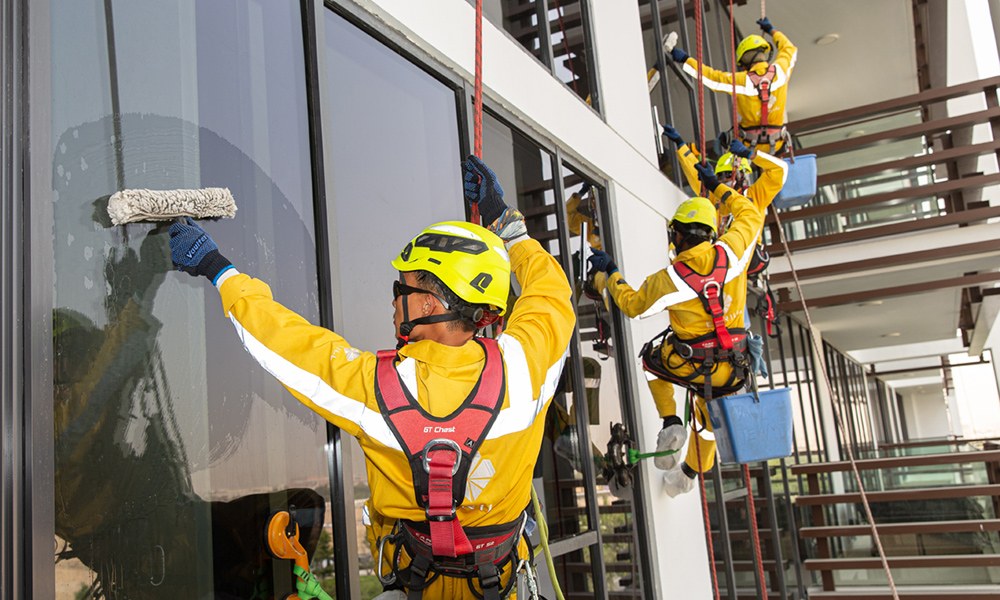
Rope access cleaning
Skilled professionals descending façades to reach every corner.
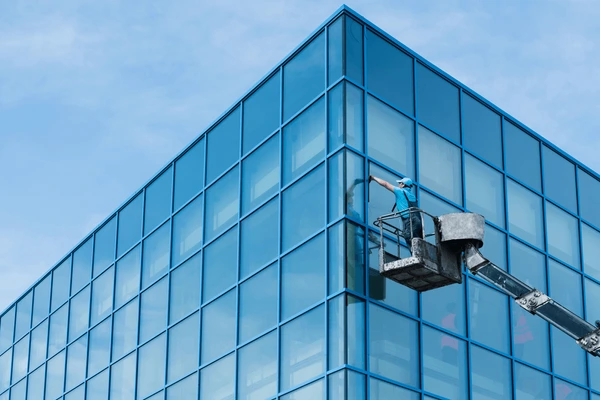
Automated and robotic systems
Increasingly popular for high glass towers.
Each method carries its own science, a measured intervention in the life of the building.
Challenges in Urban Environments
The city itself leaves its mark. Dust from traffic, moisture from heavy rain, and mould from persistent humidity are constants. In Singapore, where glass towers rise beside expressways and face the salty air of the sea, façades endure an unforgiving assault.
Cleaning them requires precision, safety, and coordination. Rope access teams must adhere to rigorous standards, and automated machines demand investment. The work must proceed without disrupting the rhythm of urban life below.
Best Practices for Effective Facade Maintenance
Over time, certain practices have become widely accepted as the foundation of effective façade care:
- Scheduled maintenance cyclesto prevent severe build-up.
- Detailed inspectionsto identify cracks, leaks, or loose fixtures early.
- Use of eco-friendly agentsto reduce environmental impact.
- Integration with building management systemsfor efficient planning.
- Emphasis on worker safetythrough training and protective equipment.
A property manager in Singapore explained, “If you delay cleaning, the façade will show it. Once stains penetrate deeply, they are harder to remove. Discipline is the best protection.”
Sustainability and Environmental Responsibility
Modern cleaning goes hand in hand with environmental consciousness. Harsh detergents are giving way to biodegradable products. Water-saving equipment is now a priority. Some façades even integrate self-cleaning coatings that harness rain and sunlight to break down pollutants.
In Singapore, these innovations are aligned with broader national policies on sustainability. Here, building façade maintenance is not a detached service but part of an ecological commitment. Forward-thinking managers increasingly see façade upkeep as part of their organisation’s sustainability strategy, strengthening reputation and reducing long-term operating costs.
Technology Reshaping Facade Cleaning
The future belongs to machines that extend human ability. Robotic window cleaners, drones with inspection tools, and AI-driven systems are already changing how buildings are maintained. Digital monitoring predicts when cleaning is due based on weather conditions, pollution levels, and surface wear.
For Singapore’s skyline, where towers gleam under the tropical sun, these technologies ensure façades remain symbols of progress without overburdening human labour. They also create safer working environments by reducing the number of hours technicians must spend suspended at height.
Impact on Perception and Value
A clean façade is more than a reflection of sunlight; it is a reflection of values. Visitors, tenants, and investors notice the care invested in a building’s exterior. Clean façades invite trust, suggesting safety and reliability. Dirty ones whisper neglect.
For commercial spaces, the façade is often the first encounter. For residential towers, it shapes the pride of those who live within. In both, the link between cleanliness and value is undeniable. The appearance of a building’s exterior speaks as loudly as any advertising campaign.
Balancing Costs and Benefits
Building façade maintenance requires investment, and costs can be significant. Yet when compared with the price of repair, replacement, or reputational damage, regular cleaning is economical. The calculation is straightforward: prevention is less costly than cure.
In Singapore, property owners often see façade cleaning as an essential operating expense rather than an optional luxury. By protecting both beauty and function, it pays dividends over time. Well-maintained buildings are more attractive to tenants, achieve higher occupancy rates, and command better rents.
Conclusion
Building facade cleaning is a practice that bridges aesthetics, health, and sustainability. It preserves what we build, sustains what we value, and projects the image we wish to share with the world. In climates as demanding as Singapore’s, where humidity and pollution never rest, the discipline of façade maintenance is not a choice but a necessity. To clean a building’s exterior is to care for its future, and few tasks are more vital than the ongoing work of building facade cleaning.